
How Specialty Chemicals Used in Modern Ice Melt Products Improve Performance, Handling, Safety, and Differentiation
Specialty chemicals used in modern ice melt products have transformed what was once considered a simple bag of salt into a more advanced performance formulation. While sodium chloride remains one of the most widely used deicing materials, today’s premium ice melt products often incorporate a variety of specialty chemicals designed to improve melting performance, reduce corrosion, minimize dust, enhance handling, improve product appearance, and increase overall customer satisfaction.
Whether supplying retail consumers, municipalities, commercial snow and ice contractors, or industrial users, manufacturers continue to differentiate their products by carefully selecting the right combination of specialty chemicals. The right formulation can deliver measurable performance advantages while helping products stand out in an increasingly competitive marketplace.
Click to Enlarge
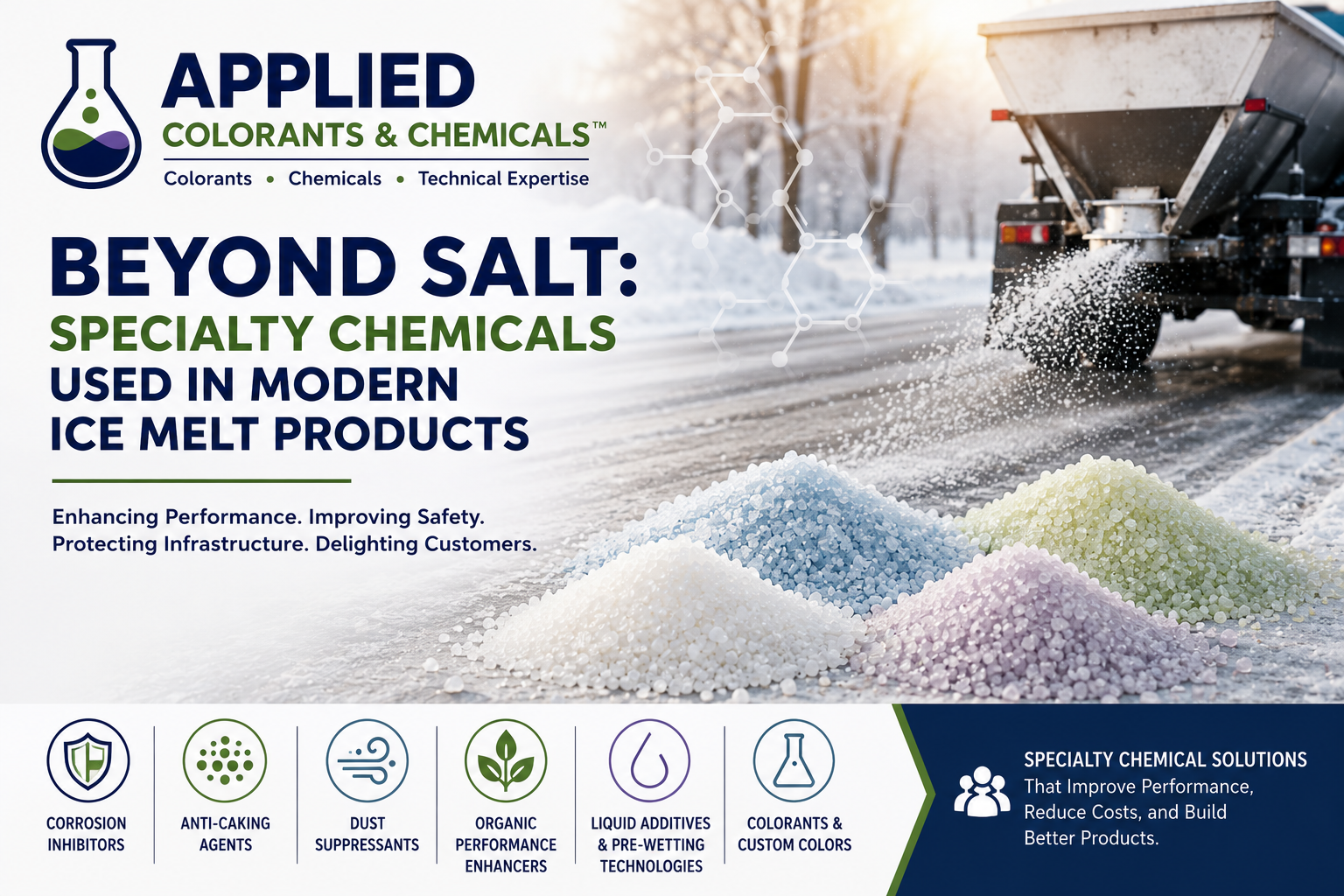
Specialty Chemicals Used in Modern Ice Melt – Modern Ice Melt Products Start with the Right Base Chemistry
Several deicing salts are commonly used depending on performance requirements, application temperature, and cost considerations.
These include:
-
- Sodium Chloride (Rock Salt)
- Calcium Chloride
- Magnesium Chloride
- Potassium Chloride
- Calcium Magnesium Acetate (CMA)
- Specialty blended deicing formulations
Each chemistry offers unique advantages depending on climate, application method, environmental considerations, and desired melting performance.
Corrosion Inhibitors
One of the biggest concerns surrounding deicing products is corrosion.
Road salts can contribute to corrosion of:
-
- Automobiles
- Bridges
- Reinforcing steel
- Parking structures
- Snow removal equipment
- Commercial facilities
To address these concerns, many premium ice melt products incorporate corrosion inhibitor technologies designed to reduce the corrosive effects associated with traditional deicing salts.
Corrosion inhibitor selection depends on the salt chemistry, application rate, performance objectives, and finished product formulation.
Anti-Caking Agents
Moisture can quickly cause deicing salts to harden or form large clumps during storage.
Anti-caking additives help maintain:
-
- Product flowability
- Storage stability
- Improved packaging performance
- Consistent spreader performance
- Longer shelf life
Proper anti-caking technology helps manufacturers deliver products that remain easy to handle throughout the winter season.
Dust Suppressants
Dust generated during production, packaging, transportation, and application can create handling challenges and reduce product appearance.
Dust suppressant technologies help:
-
- Improve worker handling
- Reduce airborne dust
- Improve product appearance
- Reduce material loss
- Enhance customer satisfaction
Selecting compatible dust suppression additives depends on manufacturing equipment, salt chemistry, and application requirements.
Organic Performance Enhancers
Many premium ice melt formulations incorporate organic performance additives to improve overall product performance.
Depending on the formulation, these additives may:
-
- Improve adhesion to pavement
- Reduce material bounce and scatter
- Improve moisture retention
- Enhance low-temperature performance
- Reduce application rates
- Improve overall spreading characteristics
Agricultural byproduct-based technologies, including beet-derived additives, have become popular components in certain premium deicing formulations because they can contribute additional performance benefits while supporting sustainability initiatives.
Liquid Additives and Pre-Wetting Technologies
Many manufacturers apply liquid additives during production to improve product performance and coating uniformity.
Depending on the formulation, liquid additives may include:
-
- Calcium chloride solutions
- Magnesium chloride solutions
- Organic performance additives
- Dust suppressants
- Corrosion inhibitor packages
- Colorants
Application methods vary and may include spray systems, drum coating equipment, ribbon blenders, or continuous mixing systems.
Proper liquid application contributes to improved product consistency and appearance.
Ice Melt Colorants
Colorants have become an important component of many premium ice melt products.
While color does not improve melting performance, it provides several practical advantages.
Manufacturers often use colorants to:
-
- Differentiate product grades
- Improve brand recognition
- Provide visual confirmation during application
- Reduce overapplication
- Improve product appearance
- Support premium product positioning
Several colorant technologies are available depending on performance requirements.
These include:
Common colors include blue, green, purple, and custom shades developed to support individual product branding.
Colorants are typically applied as liquid coatings using specialized spray equipment during the blending or manufacturing process to achieve uniform particle coverage.
Product Differentiation Through Specialty Chemistry
Today’s manufacturers compete on much more than melting speed. Successful premium products often combine multiple specialty technologies to deliver improved overall performance.
Product differentiation may include:
-
- Reduced corrosion
- Lower dust
- Improved storage stability
- Enhanced product appearance
- Better spreading characteristics
- Improved low-temperature performance
- Customized color
- Environmental considerations
- Premium customer experience
The right combination of specialty chemicals allows manufacturers to develop products that better meet the needs of distributors, retailers, municipalities, contractors, and consumers.
Working with Qualified Manufacturing Partners
Selecting specialty chemicals involves more than simply choosing individual ingredients.
Manufacturers must consider:
-
- Product compatibility
- Manufacturing process
- Performance objectives
- Regulatory requirements
- Supply continuity
- Technical support
- Commercial viability
Access to multiple qualified manufacturing partners allows manufacturers to evaluate alternative technologies and identify solutions that best support their specific product goals.
Frequently Asked Questions
What specialty chemicals are commonly used in premium ice melt products?
Depending on the formulation, manufacturers may incorporate corrosion inhibitors, anti-caking agents, dust suppressants, organic performance enhancers, liquid additives, and colorants to improve product performance and handling.
Why are many ice melt products colored?
Colorants help differentiate product grades, improve brand recognition, provide visual confirmation during application, and create a more premium product appearance.
What is the difference between water-soluble, rinseable, and polymeric colorants?
Different colorant technologies offer varying performance characteristics related to visibility, staining potential, rinseability, and application requirements. The optimal choice depends on the finished product and customer expectations.
Are specialty additives compatible with all deicing salts?
Not always. Compatibility depends on the salt chemistry, manufacturing process, performance objectives, and formulation requirements. Evaluating additive compatibility during product development is an important part of successful formulation.
Can specialty chemicals be customized for different ice melt products?
Yes. Many manufacturers customize additive packages to achieve specific performance goals, improve product differentiation, or meet customer and market requirements.
Contact Applied Colorants & Chemicals
Developing a successful ice melt product requires more than selecting the right salt. Specialty additives, including corrosion inhibitors, anti-caking agents, dust suppressants, organic performance enhancers, liquid additives, and colorants, can significantly influence product performance, handling, and market differentiation.
Applied Colorants & Chemicals helps manufacturers source specialty chemicals and colorant technologies through qualified domestic and international manufacturing partners. Whether you’re developing a new deicing formulation, improving an existing product, or evaluating alternative technologies, we can help identify solutions tailored to your technical and commercial objectives.
Contact Applied Colorants & Chemicals to discuss your next deicing or ice melt formulation project and explore specialty chemical and colorant solutions designed to support product performance, manufacturing efficiency, and long-term success.
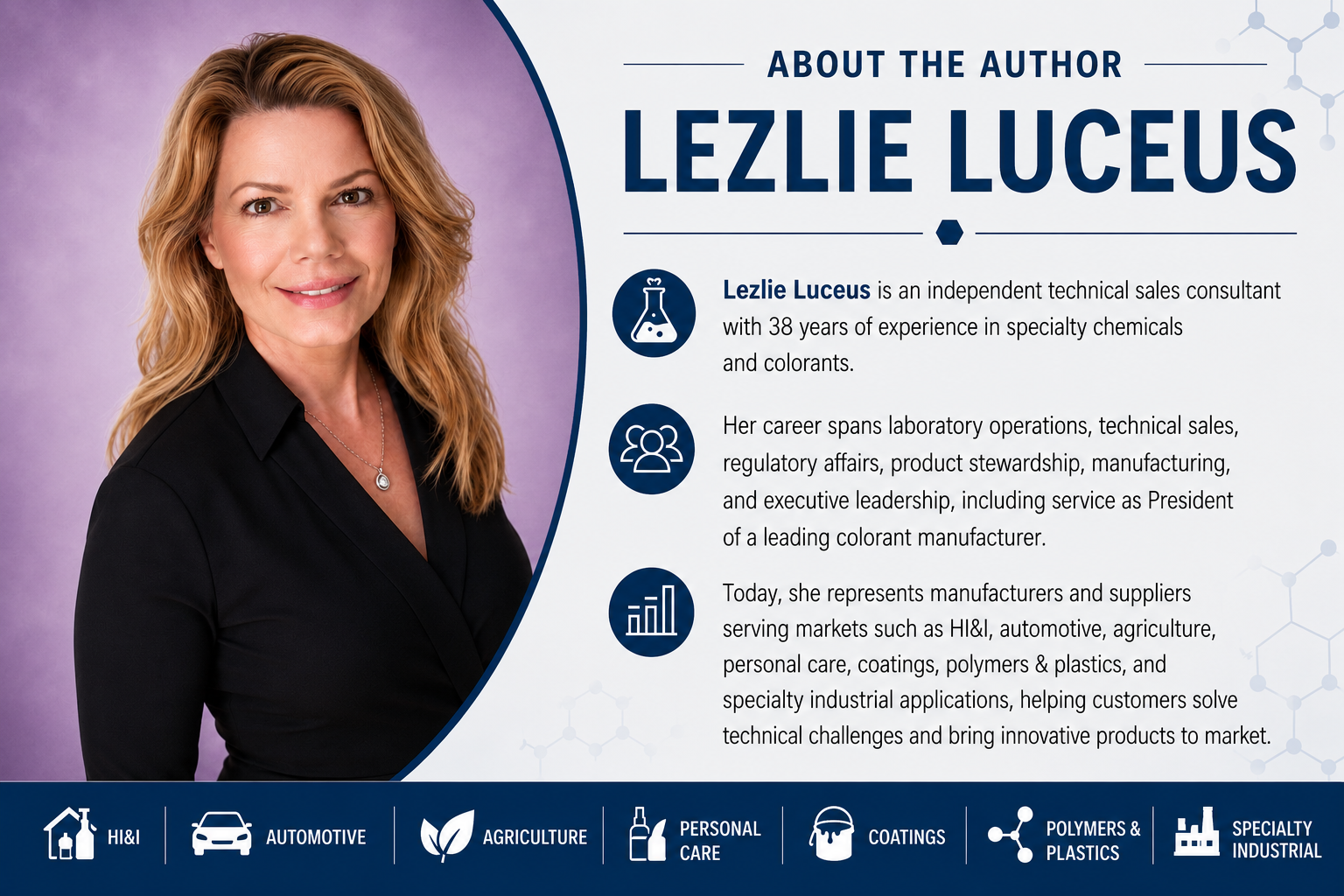
About the Author
Click to Enlarge