
Avoiding Costly Color Problems Through Proper Industrial Dye Selection and Qualified Manufacturing Partners
Selecting an industrial dye involves much more than choosing the desired color. Successful color performance depends on selecting the appropriate dye chemistry for the application, manufacturing process, end-use environment, and regulatory requirements.
When the wrong dye is selected, manufacturers may experience product failures, inconsistent performance, production delays, customer complaints, or costly reformulation. Many of these issues can be avoided by understanding the technical requirements of the application before production begins.
Applied Colorants & Chemicals provides technical sales support and sourcing assistance for industrial dyes used in a wide range of manufacturing applications. Working with qualified domestic and international manufacturing partners, assistance is available in identifying appropriate dye technologies for new product development, reformulation projects, second-source qualification, and ongoing production.
Click to Enlarge
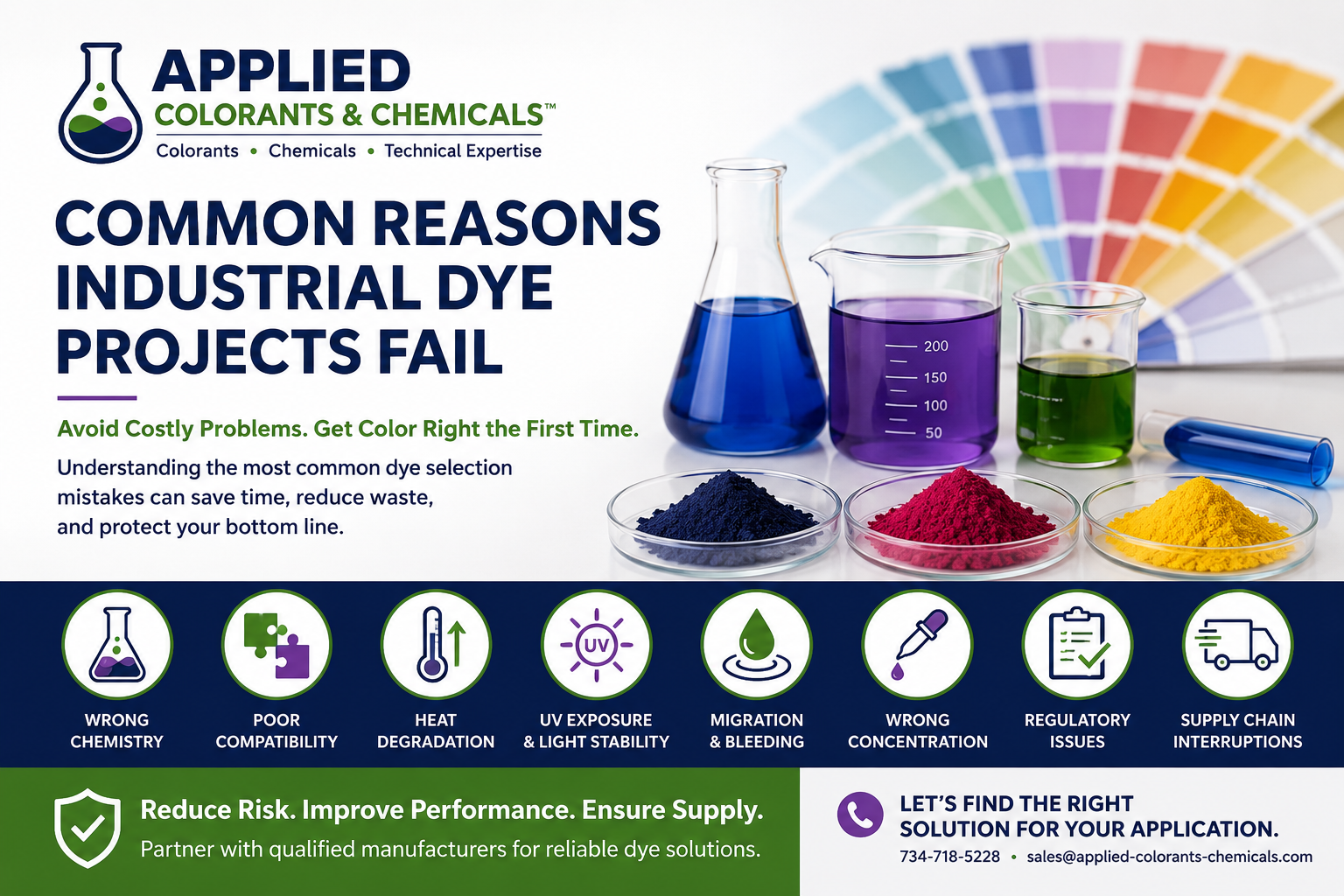
Common Reasons Industrial Dye Selection Projects Encounter Problems
Incorrect Dye Chemistry
Not all dyes perform the same. Water-soluble, oil-soluble, solvent-soluble, and specialty dye chemistries each offer unique performance characteristics and are designed for specific applications. Selecting a dye based on its compatibility with the application is key to avoiding poor performance, processing challenges, or premature product failure.
Poor Compatibility with the Formulation
A dye must be compatible with the complete formulation in which it is used. Incompatible dyes may separate, precipitate, bleed, crystallize, or create haze, resulting in inconsistent appearance and reduced product quality. Compatibility should always be evaluated using the complete formulation, processing conditions, and intended end use.
Heat Degradation During Manufacturing
Many manufacturing processes expose colorants to elevated temperatures. If the selected dye cannot tolerate processing temperatures, color strength may decrease, shades may shift, or the dye may degrade during production. Understanding manufacturing conditions is essential when selecting the appropriate dye chemistry.
Light Exposure and Color Stability
Light exposure is an important consideration when selecting an industrial dye. Products displayed in transparent packaging or exposed to prolonged indoor retail lighting may experience fading over time if the selected dye does not provide adequate light stability.
For applications requiring long-term outdoor weatherability and resistance to ultraviolet (UV) exposure, pigments are generally the preferred color technology because they typically offer significantly greater lightfastness and weather resistance than dyes.
Selecting the appropriate color technology depends on the application’s intended environment, expected service life, packaging, and performance requirements.
Dye Migration and Bleeding
Certain dye chemistries may migrate into adjacent materials or bleed under specific environmental or processing conditions. Migration can become a concern in plastics, coatings, adhesives, sealants, packaging, textiles, and many specialty applications where long-term color stability is important.
Incorrect Dye Concentration
Using too little dye may produce weak or inconsistent color, while excessive concentrations can increase raw material costs without improving performance or cause unnecessary staining. Higher dye loadings may also affect processing characteristics or finished product properties.
Determining the appropriate dye concentration helps optimize both color performance and manufacturing efficiency.
Regulatory and Compliance Requirements
Many industries require colorants that comply with specific regulatory standards or customer specifications. Depending on the application, requirements may include FDA regulations, food contact guidelines, cosmetic regulations, environmental requirements, or other industry-specific standards.
If the finished product will be exported internationally, manufacturers should also verify that all components of the selected dye, including the dye itself and any carriers, solvents, preservatives, or other ingredients, are listed on or comply with the applicable chemical inventories and regulatory requirements of the destination country. Failure to meet these requirements can delay product approvals, disrupt shipments, or limit market access.
Regulatory considerations should be evaluated early during product development and supplier qualification to help support compliance and avoid costly changes later in the manufacturing process.
Supply Chain Challenges
Even a technically successful formulation can become problematic if the selected raw material becomes unavailable, manufacturing capacity changes, or extended lead times disrupt production.
Working with qualified manufacturing partners and identifying alternative sources can improve supply continuity while reducing business risk.
Reducing Risk Through Qualified Manufacturing Partners
Successful industrial dye selection requires balancing technical performance, processing requirements, regulatory compliance, manufacturing capability, cost objectives, and long-term supply reliability.
Applied Colorants & Chemicals works with qualified domestic and international manufacturing partners supplying a broad portfolio of industrial dyes, including water-soluble dyes, oil-soluble dyes, solvent-soluble dyes, liquid dye systems, powder dyes, rinseable dyes, and other specialty color technologies.
Whether the objective is identifying an alternative supplier, qualifying a second source, selecting the appropriate dye technology for a new application, or strengthening supply chain reliability, Applied Colorants & Chemicals provides technical sales support throughout the sourcing process.
Frequently Asked Questions
Why do industrial dye projects fail?
The most common causes include selecting the wrong dye chemistry, formulation incompatibility, inadequate light or heat stability, migration, incorrect dye concentration, regulatory issues, and supply chain disruptions.
Why do dyes sometimes fade indoors?
Many dyes can gradually fade when products are displayed under continuous retail lighting or packaged in clear or transparent containers that allow light exposure. Selecting a dye with appropriate light stability for the application helps minimize fading.
Are dyes recommended for outdoor applications?
For products requiring long-term outdoor durability and UV resistance, pigments are generally the preferred color technology because they typically provide superior lightfastness and weather resistance.
What types of industrial dyes are available?
Available technologies may include water-soluble dyes, oil-soluble dyes, solvent-soluble dyes, liquid dyes, powder dyes, rinseable dyes, and other specialty color systems, depending on the application.
Does Applied Colorants & Chemicals manufacture dyes?
No. Applied Colorants & Chemicals is an independent technical sales representative that provides access to qualified manufacturers offering industrial dyes, pigments, and specialty chemicals for a broad range of industries.
Contact Applied Colorants & Chemicals
Selecting the appropriate dye technology is critical to achieving consistent color, reliable manufacturing performance, regulatory compliance, and long-term product success.
Whether you are developing a new product, evaluating an alternative supplier, qualifying a second source, or troubleshooting an existing application, Applied Colorants & Chemicals can help identify qualified manufacturing partners offering industrial dyes, pigments, and specialty chemicals that meet your technical and supply chain requirements.
Contact Applied Colorants & Chemicals today to discuss your application and learn how technical sales support and chemical sourcing assistance can help move your project forward.
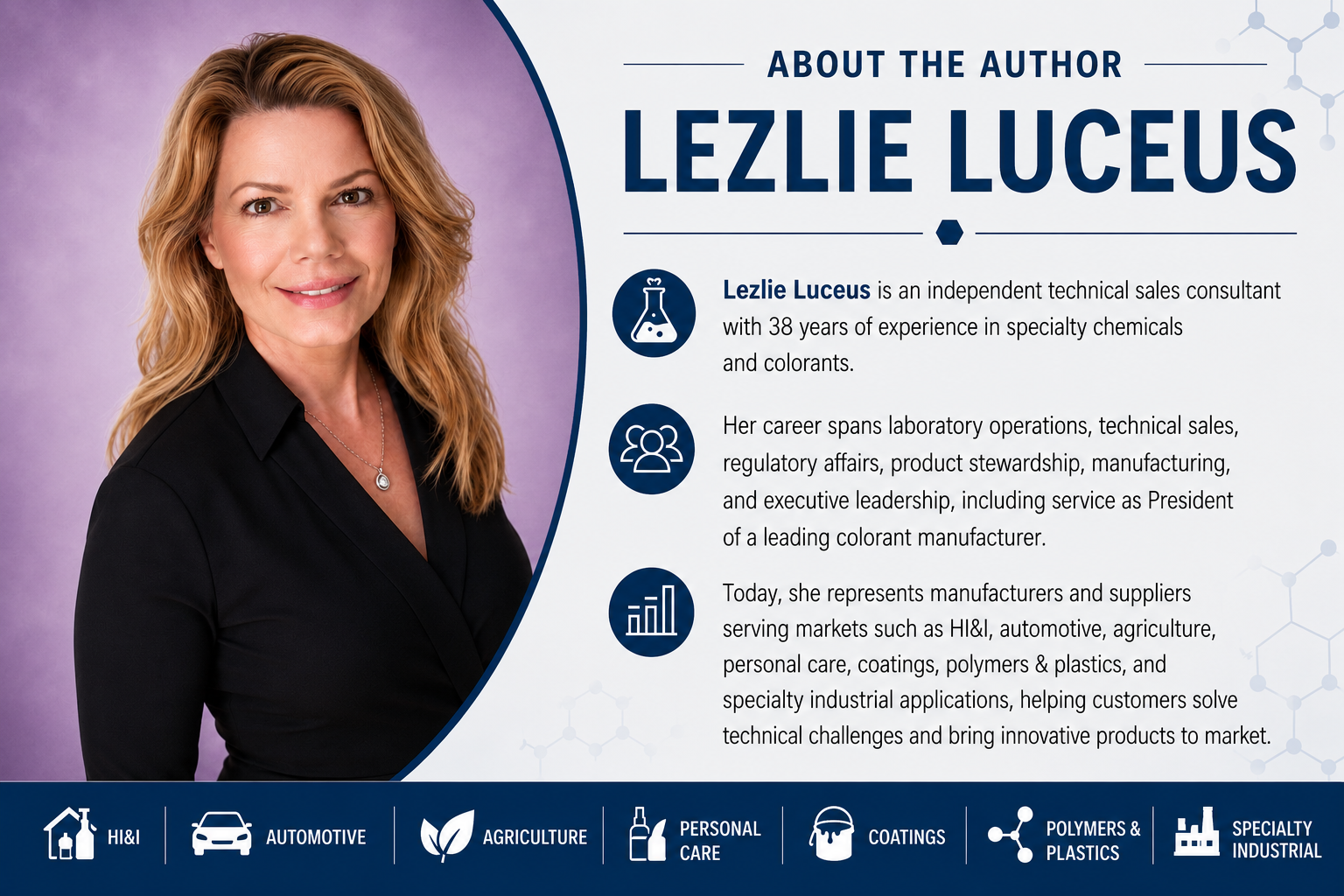
About the Author
Click to Enlarge